60-Minute Hockey Practice Plan Template (Free Printable PDF)
August 7, 2026
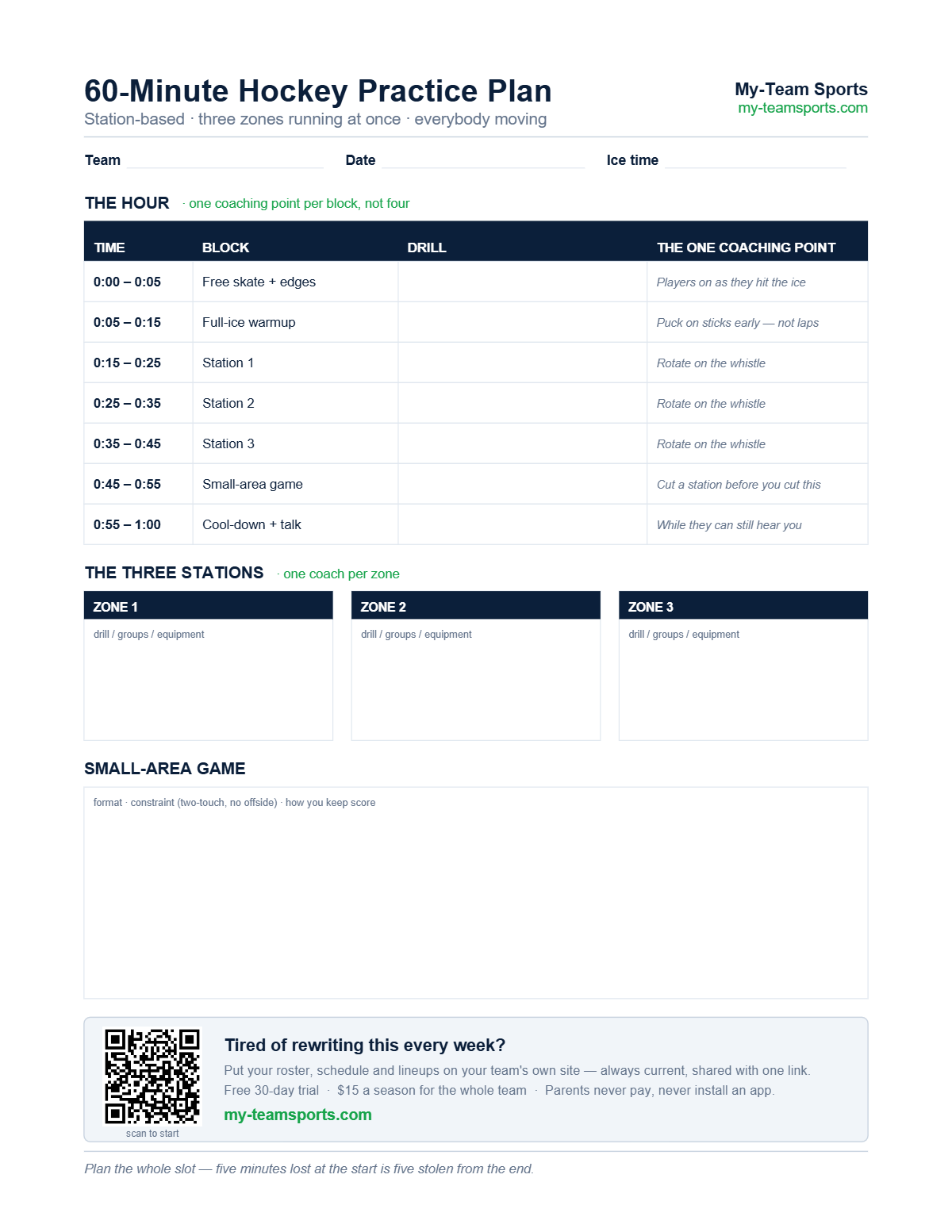
Ice is the most expensive hour in youth sports, and the classic drill — twenty kids in one line at the blue line, one skater going at a time — wastes most of it. This free printable plan is built the other way: the sheet is split into zones, small groups rotate through stations, and almost everybody is moving almost all the time.
How the hour is laid out
Five minutes of free skate and edges as players come on. Ten minutes of a full-ice warmup that touches the puck early rather than skating laps. Then the core: thirty minutes of three stations running at once in the three zones, groups rotating every ten minutes. Ten minutes of a small-area game to finish, and five minutes of a cool-down and a short talk while everyone can still hear you.
The plan has a blank column beside each block. Write the drill name and the one coaching point you actually intend to say — one, not four. A practice where every player hears the same single cue three times teaches more than one where they hear twelve different cues once.
Why stations, not lines
Running three stations in three zones roughly triples the repetitions each player gets in the same hour, and it solves the discipline problem at the same time — kids standing in a long line find something else to do, and it is rarely hockey. It also means one coach never has to hold the attention of the whole group; each coach owns a zone and a drill and can actually teach.
At the younger ages, cross-ice and half-ice work is not a compromise for lack of space; it is the point. A smaller surface puts the puck on every stick more often, forces quicker decisions, and produces more of the battles along the boards that actual games are made of.
The small-area game is not the reward
It is common to finish with a scrimmage and treat it as the fun part after the real work. Flip that. A three-on-three in one zone with a two-touch rule or no offside is where the skills from the stations get used under pressure, and it is the closest thing to a game your practice contains. Protect those ten minutes; cut a station before you cut them.
Keeping the season straight
One printed plan runs one practice. The rest of the season — who is coming, which rink, what time the ice actually starts, and what happened last game — is where hockey families lose track. If you run your team on My-Team Sports, the schedule with rink addresses and RSVPs, the roster, the live score by period, photos, and your breakouts drawn in the Coach's Playbook all sit on one page anyone on your team opens with a link. Parents never install an app, never make an account, and never pay.
Related coaching tools
Frequently asked questions
How long should a youth hockey practice be?
Most youth ice slots run fifty to sixty minutes. Plan the whole slot in timed blocks — a five-minute overrun at the start is five minutes stolen from the end, because the next team is already at the door.
What is a station-based hockey practice?
The ice is divided into zones, each with its own coach and drill, and small groups rotate through on a timer. Every player gets far more repetitions than in a single-line full-ice drill, and each coach only has to manage a handful of kids at a time.
Why is cross-ice hockey used for younger players?
A smaller playing surface puts the puck on each player's stick far more often, shortens the distance decisions have to be made in, and creates more puck battles. It develops skills faster than full ice at ages where players cannot yet cover the full sheet.
How many coaches do you need for a station practice?
Three is comfortable — one per zone. Two works if one station is self-running, like a skills course players can cycle through without instruction. A parent volunteer can run a timer and rotate groups even without hockey experience.