Soccer Lineup & Formation Sheet (Free Printable)
July 10, 2026
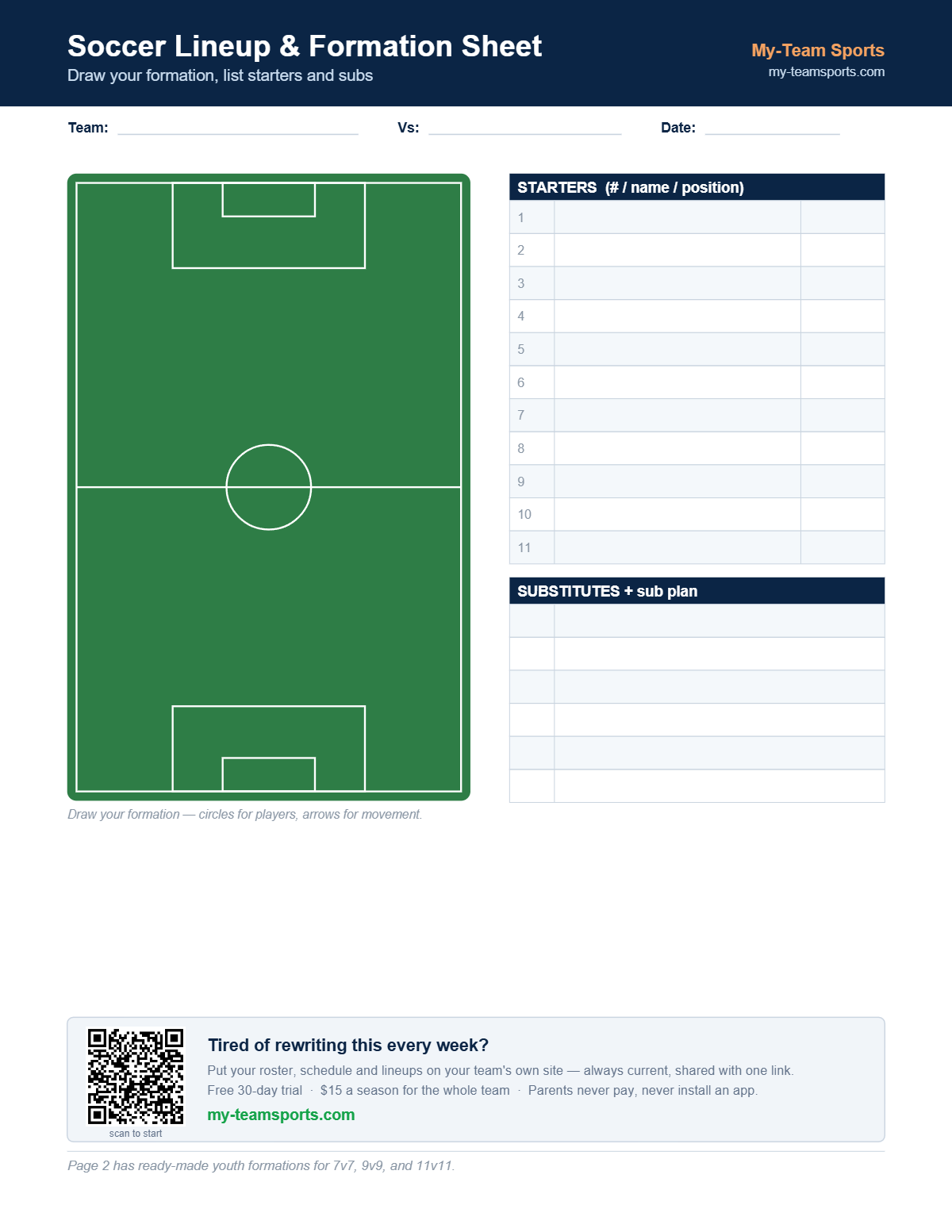
Game day goes smoother when the lineup is decided in your kitchen, not on the touchline. This free printable gives you a pitch to draw your formation, numbered rows for starters and substitutes, and a second page with the three most-used youth formations ready to copy.
The three formations every youth coach should know
| Format | Formation | Why it works |
|---|---|---|
| 7v7 (U9–U10) | 2-3-1 | A solid base of two defenders, a midfield three that sees lots of ball, one striker to chase everything |
| 9v9 (U11–U12) | 3-2-3 | Three at the back for security, two central engines, and wide attackers who stretch the field |
| 11v11 (U13+) | 4-3-3 | The classic: a back four, a midfield triangle, and a front three that presses |
How to pick a shape for your team
Count your reliable defenders first. If you have two kids who genuinely love defending, the 2-3-1 works; if you have one, play three at the back so no single mistake becomes a goal. Attack-minded rosters can flip the emphasis, but at youth level a stable back line buys your whole team confidence.
Teach 'home base,' not chains
A formation tells each player where home is — where they return when their run is over. It should never stop a fullback from joining an attack or a striker from tracking back. Walk your shape on the field once, name each position's home, and then let them play. The diagram on your clipboard is a map, not a cage.
Plan your subs on the same page
The substitutes section includes space for a sub plan — who comes on, for whom, and when. Deciding it before kickoff is how every kid gets fair minutes without you doing math mid-match. If you run your team on My-Team Sports, the Coach's Playbook also draws formations digitally on a proper pitch, and players can study them from the team site during the week.
Related coaching tools
Frequently asked questions
What is the best formation for 7v7 youth soccer?
The 2-3-1 is the most common and most forgiving: two defenders, three midfielders, one striker. It keeps a solid base while putting most players in midfield, where they touch the ball constantly.
What formation should a 9v9 team play?
The 3-2-3 is the popular choice — three defenders, two central midfielders, and three attackers. It is balanced, teaches wide play, and translates naturally to 11v11 shapes later.
Should young players stick to one position?
No. Use the formation to organize the game, but rotate players through positions across the season. The ten-year-old fullback may be your future striker, and versatile players develop faster.