Special Teams Depth Chart Template (Free Printable PDF)
August 3, 2026
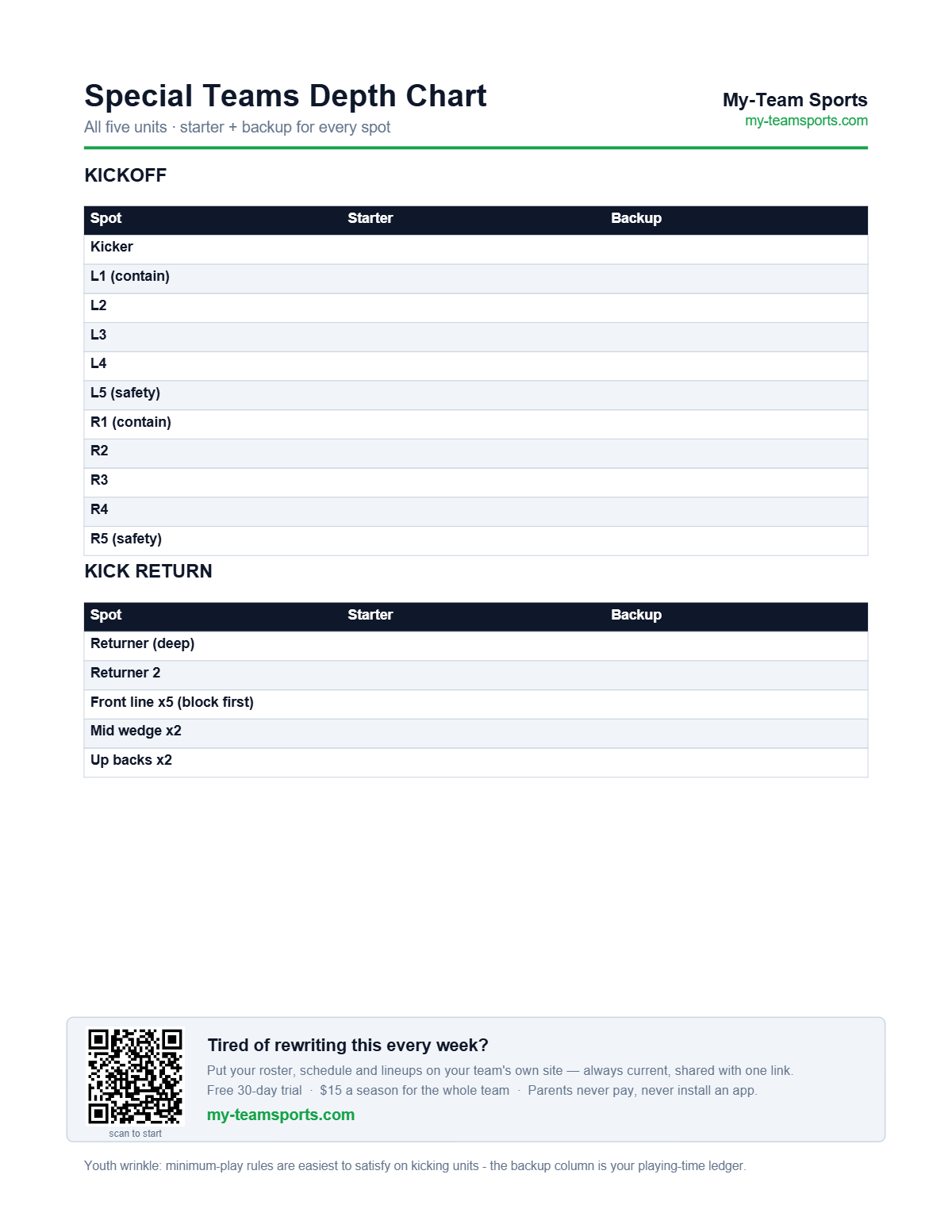
Every coach has a depth chart for offense and defense. Almost nobody has one for special teams — which is why the punt team huddle is eleven kids looking at each other while you burn a timeout. Special teams is a third of the game and the phase where one missing kid does the most damage. This free template puts all five units on one printable sheet, with a starter and a backup for every spot.
The five units, and the spot that breaks each one
| Unit | The spot that breaks it | Coach it by |
|---|---|---|
| Kickoff | Contain — the widest lane runner | "Never let the ball outside you" |
| Kick return | Front-line blockers who turn and chase the ball | Block first, watch second |
| Punt | The personal protector (last man before the punter) | Count the rush out loud |
| Punt return | The returner's fair-catch judgment | Rep the fair catch signal every week |
| FG / PAT | The wings — edge rushers come from there | Inside foot back, never chase |
Backups matter more here than anywhere
On offense, if your right guard is out you notice at practice. On special teams you notice when the punt snap sails past a kid who's never stood there. Fill the backup column for every single spot — even if the backup is "same kid as kickoff L3" — because the sheet's real job is answering "who goes in?" in the four seconds you actually have. Youth wrinkle: league minimum-play rules are easiest to satisfy on kicking units, so your backup column is also your playing-time ledger.
The five-minute Friday routine
Once a week, read each unit off the sheet out loud while the kids stand in their spots. That's it. Ten minutes of standing in the right place on Friday saves three timeouts on Saturday, and the sheet turns the drill from memory into roll call. Pair it with your offensive depth chart and roster sheet and the whole game-day binder is three pages.
Keep the chart with the roster
A depth chart drifts the moment a kid misses a week. If your roster lives on My-Team Sports, attendance and roster changes are already tracked on your team site — update the chart from real availability instead of memory, and post the week's units where parents can see who's starting where.
Related coaching tools
Frequently asked questions
What positions are on special teams?
Across the five units: kicker, punter, long snapper, holder, returners, a personal protector on punt, wings and a shield on the block units, lane runners with contain responsibility on kickoff, and front-line blockers on returns. Most kids play a different role on each unit, which is exactly why a written chart matters.
How do I build a special teams depth chart?
List all five units — kickoff, kick return, punt, punt return, FG/PAT — and assign a starter and backup to every spot before the season. Anchor the specialists first (snapper, kicker, punter, returner), fill lanes with your most reliable tacklers, and read the units out loud once a week so kids know their spots by feel.
Do youth teams really need special teams depth charts?
More than varsity teams do. Youth rosters change week to week with absences, and minimum-play rules are easiest to satisfy on kicking units — the chart is how you handle both without burning game-day timeouts.